
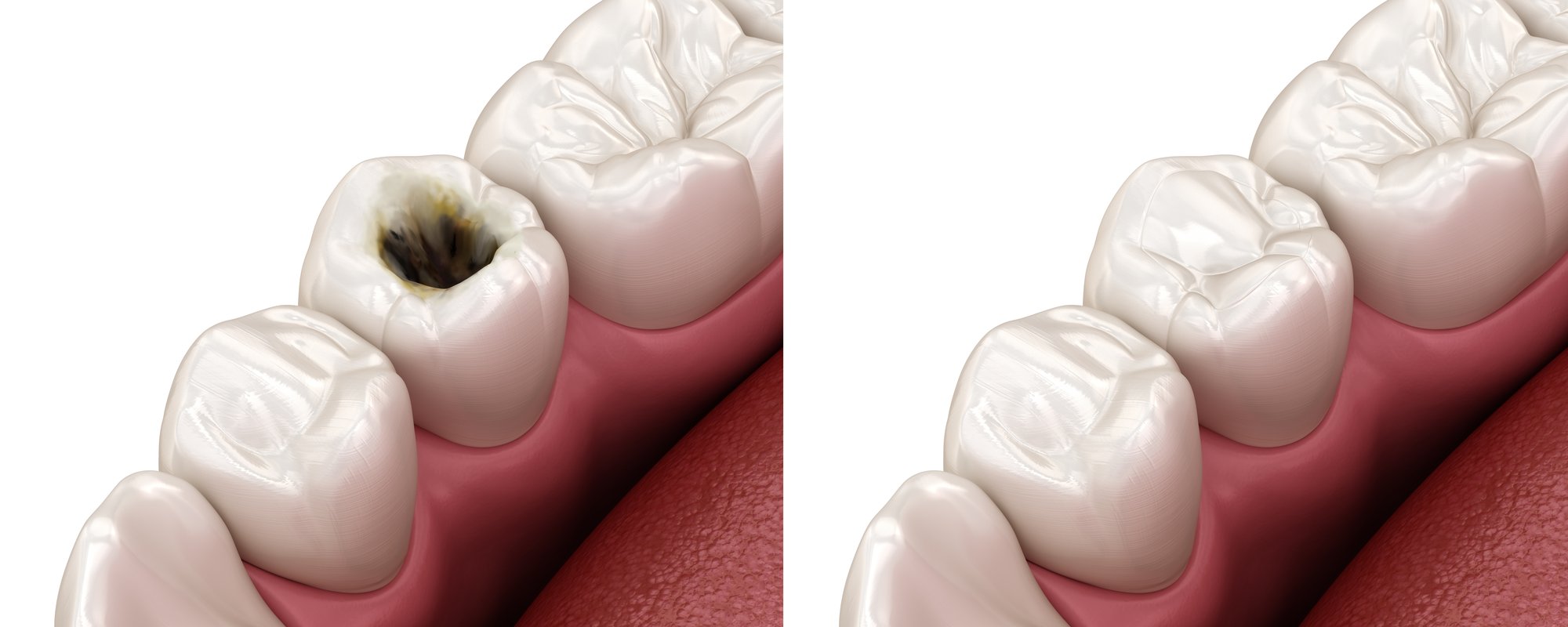
Ever wonder what makes a cavity form between teeth where your brush cannot reach? These hidden cavities start when plaque settles in the tight spaces and produces acid. An interproximal cavity is decay that develops on the surfaces where two teeth touch. Caught early, it is easily repaired with tooth-colored fillings that blend right in. A little prevention goes a long way after a sweet treat from the weekly Sunset Market.
Key Takeaways
- Cavities between teeth form where a toothbrush cannot reach. Plaque and acid do the damage.
- Bacteria feed on sugar and release enamel-eroding acid. Trapped plaque speeds up decay.
- Skipping floss lets plaque build up between teeth. Daily flossing is the best defense.
- These cavities often hide until a checkup or X-ray. Early detection keeps them small.
- Tooth-colored fillings repair the decay discreetly. They match your natural teeth.
What Makes a Cavity Form Between Teeth?
The tight contact area between two teeth is a perfect hiding spot for trouble. According to the ADA’s MouthHealthy, decay starts when plaque bacteria feed on sugars and produce acid that eats away at enamel. Because a toothbrush cannot slip between teeth, that plaque lingers, and the acid keeps working. Over time, a small weak spot becomes a cavity.
Why Do Cavities Like the Spaces Between Teeth?
The spots where teeth touch are naturally hard to clean. Food and plaque wedge into these gaps and stay put if flossing is skipped. Shielded from your brush, bacteria have time to produce acid and weaken the enamel. That is why so much decay begins between the teeth rather than on open surfaces.
What Role Does Plaque Play?
Plaque is the sticky film of bacteria that constantly forms on your teeth. When it is not removed, the bacteria turn sugar from your food into acid. That acid strips minerals from the enamel, opening the door to decay. Between the teeth, where plaque is hardest to reach, this process runs unchecked.
What Habits Raise Your Risk?
Everyday choices have a big say in how likely cavities are to form between your teeth. A few common habits quietly raise the odds of decay. Knowing them makes it easier to protect those hidden surfaces.
- Skipping Floss. Plaque stays between teeth. Brushing alone cannot reach it.
- Sugary Snacks. Sugar feeds acid-making bacteria. Frequent snacking is worst.
- Sticky Foods. Candy and dried fruit cling. They linger between teeth.
- Dry Mouth. Less saliva means less rinsing. Acid stays on the enamel.
- Skipped Checkups. Early decay goes unseen. X-rays catch it sooner.
How Do You Know You Have a Cavity Between Your Teeth?
Cavities between teeth are sneaky because you often cannot see them. Early on, there may be no pain or visible hole at all. As decay grows, you might notice sensitivity to sweets, a rough spot with floss, or a faint stain. Our dentist usually spots these cavities with an exam and a bitewing X-ray.
How Are Cavities Between Teeth Treated?
Once a cavity is found, the fix is usually straightforward. Our dentist removes the decay and fills the space with tooth-colored fillings that match your enamel. These composite fillings restore the tooth and are hard to spot. Treating decay early keeps it from spreading to the nerve and needing more involved care.
How Can You Prevent Them?
Prevention really does start with daily habits. Floss once a day to clear plaque from between the teeth, and brush twice with fluoride toothpaste. Cut back on frequent sugary snacks that feed decay-causing bacteria. Regular checkups let your dental team catch any trouble early.
Are Cavities Between Teeth Common?
Cavities between teeth are among the most common types of decay. Because the contact points are so hard to clean, they catch many people by surprise. They can form at any age, though the risk climbs when flossing slips. The encouraging part is that they are highly preventable with steady care.
Can You Catch Cavities Early?
Early detection makes these cavities far easier to handle. In the beginning, decay only softens the enamel and causes no symptoms. Our dentist can spot these changes on a bitewing X-ray long before you feel anything. That is why routine checkups matter so much for the spaces you cannot see.
What Happens If You Ignore One?
A small cavity between teeth will not heal on its own. Left alone, the decay spreads deeper and can reach the sensitive inner tooth. At that point, a simple filling may no longer be enough, and a root canal or crown could be needed. Treating it early keeps the repair small and straightforward.
Protecting the Spaces You Can’t See
Knowing what makes a cavity form between teeth puts you a step ahead of decay. Trapped plaque and acid are the culprits, and flossing is your strongest defense. When a cavity does slip through, tooth-colored fillings restore the tooth quietly and effectively. A steady home routine and regular visits keep those hidden spaces healthy.
- If you want to learn more about what makes a cavity form between teeth, visit our Tooth-Colored Fillings in Oceanside, CA page or schedule a consultation.