
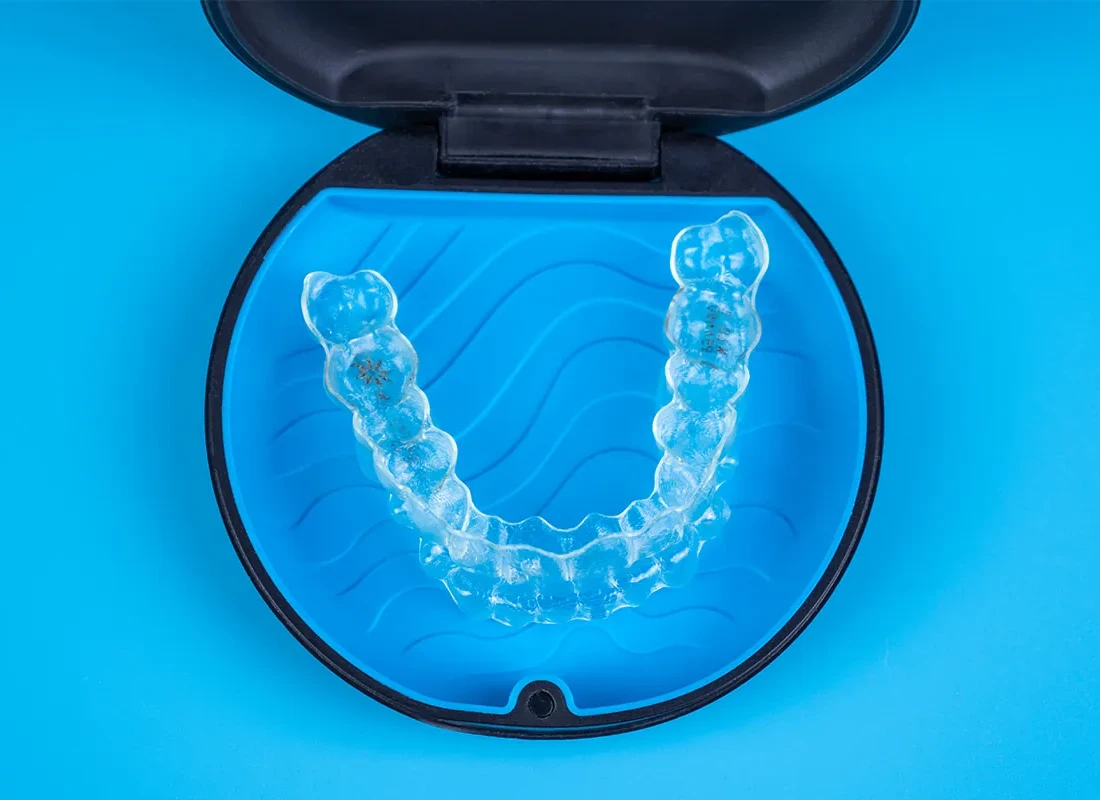
Clear aligners only work when they are worn every day, and school days give teens plenty of chances to build that routine.
Between early bells, a short lunch period and a backpack that swallows small things, can a teen really keep aligners on track? Success with Invisalign for teens depends much less on any single appointment than on the habits around it.
Clear aligners are removable trays that move teeth a little at a time, and they only work while they are in the mouth. Treatment also has to fit around class, sports practice and friends, so the routine matters as much as the plan.
Quick Answer
A teen keeps Invisalign on track by wearing the aligners about 22 hours a day and taking them out only to eat, drink anything but water and clean them. Brush before the trays go back in. Store them in a case kept in the same backpack pocket every day.
Key Takeaways
- Clear aligners need to be worn nearly all day and removed only for meals and cleaning.
- Taking trays out to eat and drink anything but water protects them from stains and damage.
- Brushing before the aligners go back in keeps the teeth clean and comfortable underneath.
- A sturdy case in the backpack keeps trays from being lost, crushed or thrown away.
- Teeth only move while the trays are in, so wear them every day.
How Many Hours a Day Do Clear Aligners Need to Be Worn?
Aligners need to be in about 22 hours a day. That leaves roughly two hours for eating, drinking and cleaning, which sounds generous until a school day fills it. A teen who takes the trays out at breakfast, lunch and an afternoon snack, and brushes each time, can use up those hours quickly.
Wear time is what moves the teeth. Hours spent with the trays in a pocket or a case are hours when the teeth are not being guided, and missed wear can slow progress.
What Should a Teen Do With Aligners at Lunch?
Take the aligners out to eat and put them back in when the meal is over. Plain water is the only drink that belongs with aligners in, so a soda, juice or sports drink is best finished before the trays go back in.
A small kit makes the routine realistic, because lunch periods are short. A travel toothbrush, a small tube of toothpaste and the case fit in a pencil pouch. Brushing before the trays go back in keeps food and drink from sitting against the teeth for the hours ahead.
How Do Teens Keep Aligners Clean?
Cleaning is brief and needs no special products. Rinse the trays when they come out, and brush them gently with a soft toothbrush and cool water. Heat can warp aligners, so cool or lukewarm water is the one to use. A soft brush is gentle enough that the aligners stay smooth and clear.
The teeth need cleaning too. Brushing with fluoride toothpaste twice a day and cleaning between the teeth once a day help prevent cavities under the trays.
Where Should the Case Live During the School Day?
Keep the case in the same place every day, such as a pocket of the backpack that is easy to reach. Trays wrapped in a napkin on a lunch tray are a common way to lose them, because a napkin looks like trash to anyone clearing the table.
Putting the trays into the case every time they come out keeps them off the lunch tray and out of loose pockets. A hard case also keeps the trays from being crushed at the bottom of a bag.
What About Sports, Music and Other Activities?
Aligners are not a substitute for a mouth guard. They do not cushion a blow to the face, and a teen who plays a contact sport needs a guard designed for that purpose. A dentist can say whether the guard should go over the aligners or replace them during play.
A band rehearsal or a late practice can push meals and cleaning off schedule. Planning ahead protects wear time.
Why Does Daily Wear Matter for the Result?
According to MedlinePlus, malocclusion means the teeth are not aligned properly, and it is most often hereditary. Very few people have perfect alignment, and most problems are minor. Moderate or severe cases are the ones where correction can matter for health as well as appearance.
The same page notes that correcting such a problem can help keep teeth clean, lower the risk of tooth decay and gum disease, and relieve strain on the teeth, jaws and muscles. Clear aligners, which use no wires, can treat some of these problems. Those benefits only come once the teeth reach their new positions, so wearing the trays every day is the main work of treatment.
Frequently Asked Questions
What should a teen do after forgetting to wear aligners for a day?
Put the aligners back in as soon as you notice and keep up the routine from then on. Missed wear can slow progress, since the teeth only move while the trays are in. If several days were missed, call the office so the dentist can check how treatment is going.
What should a teen do about a lost or broken aligner?
Call the office as soon as it happens, because the dentist decides whether to replace the aligner or adjust the plan. Bring any broken pieces along. Keeping each tray in its case after every meal is the best way to avoid losing one.
How long does a teen need to wear Invisalign?
Treatment time depends on how far the teeth need to move, so it differs from one teen to the next. A dentist can give a timeline after an exam and a scan. Wearing the trays about 22 hours a day is what keeps treatment on that schedule.
Related Reading
-
If you want to learn more about teen aligner treatment, visit our Invisalign in Oceanside, CA, page or schedule a consultation.